In the realm of industrial fasteners, TREP French Spring Washers have carved out a niche for themselves due to their unique design and practical applications. As a supplier of these specialized washers, I’ve received numerous inquiries from customers about the ease of removing them. This question is crucial for many reasons, especially when considering maintenance, replacement, or re – using the washers in various machinery and equipment. TREP French Spring Washers

Understanding TREP French Spring Washers
TREP French Spring Washers, also known as curved spring washers, are distinguished by their curved shape. This curvature allows them to flex under load, creating a spring – like action that helps maintain a constant tension between the fastener and the joint. This is particularly useful in applications where vibration, thermal expansion, or loosening might occur. Unlike flat washers that primarily distribute the load, TREP French Spring Washers are designed to prevent bolt looseness by providing a continuous pre – load.
These washers are commonly used in industries such as automotive, aerospace, and heavy machinery. In automotive engines, for example, they are used to secure critical components like cylinder head bolts. In the aerospace industry, they play a vital role in ensuring the integrity of fasteners in high – stress environments, such as on aircraft wings.
Factors Affecting the Ease of Removal
Installation Method
The way TREP French Spring Washers are installed significantly impacts their removal. If they are installed correctly, with the appropriate torque applied to the fastener, removal is generally more straightforward. When a fastener is tightened too much during installation, the washer can become overly compressed, and the spring – like action is reduced. This over – compression can cause the washer to bind more tightly against the fastener and the joint surface, making removal difficult.
On the other hand, insufficient tightening may lead to the washer shifting or vibrating loose during operation. In such cases, the washer might not be firmly seated, and it could be relatively easy to remove. However, this also poses a risk of the fastener coming completely loose, which can be dangerous in critical applications.
Environmental Conditions
Environmental factors also play a major role in the ease of removing TREP French Spring Washers. In a clean, dry environment, the washers are less likely to be affected by corrosion or the accumulation of dirt and debris. Corrosion, in particular, cancause the washer to adhere to the fastener or the joint surface. For example, in coastal areas where there is a high salt concentration in the air, metal components are more prone to rusting. If a TREP French Spring Washer corrodes, it can fuse with the fastener and make removal a challenging task.
Similarly, in dirty or dusty environments, particles can get trapped between the washer and the fastener, creating a sort of abrasive layer that increases the friction and makes it harder to remove the washer.
Material of the Washer and the Fastener
The material of both the TREP French Spring Washer and the fastener can influence the ease of removal. If the washer and the fastener are made of the same material, there is a lower risk of galvanic corrosion, which occurs when two different metals are in contact in the presence of an electrolyte (such as moisture). However, if the materials are not compatible, galvanic corrosion can accelerate, leading to the bonding of the washer and the fastener.
For example, if a steel washer is used with an aluminum fastener in a humid environment, galvanic corrosion may occur. The resulting corrosion products can fill the space between the washer and the fastener, making it extremely difficult to remove the washer without damaging the components.
Tools and Techniques for Removal
Basic Hand Tools
In most cases, simple hand tools are sufficient for removing TREP French Spring Washers. A pair of pliers can be used to grip the washer and gently twist or pull it off the fastener. The key is to apply even pressure to avoid damaging the washer or the fastener. However, if the washer is tightly compressed or corroded, using pliers alone might not be enough.
A socket wrench or a spanner can be used to loosen the fastener first. By loosening the fastener, the pressure on the washer is reduced, making it easier to remove. It is important to select the correct size of the tool to avoid slipping and causing damage.
Specialized Tools
For more challenging situations, specialized tools may be required. A washer extractor tool is designed specifically to remove washers. This tool has a unique design that allows it to grip the washer tightly and pull it off without causing excessive damage. Heat can also be used as a technique for removal. By applying heat to the fastener, the metal expands, and the pressure on the washer is reduced. Care must be taken when using heat, as excessive heat can damage both the washer and the surrounding components.
Real – World Experiences
Over the years of supplying TREP French Spring Washers, I’ve heard diverse stories from customers regarding their removal experiences. Some customers who work in well – maintained industrial environments with proper installation procedures have reported that removing the washers is a relatively simple task. For instance, a manufacturer of small – scale machinery shared that they often need to replace TREP French Spring Washers during routine maintenance. Using basic hand tools, they can quickly remove the washers without any major issues.
On the contrary, customers in harsh environmental conditions face more difficulties. An offshore oil rig operator contacted me about the challenges they were facing in removing the washers. Due to the constant exposure to saltwater and high – pressure conditions, the washers were severely corroded. They had to resort to using specialized extraction tools and heat treatment to remove the washers safely.
Conclusion: Are TREP French Spring Washers Easy to Remove?
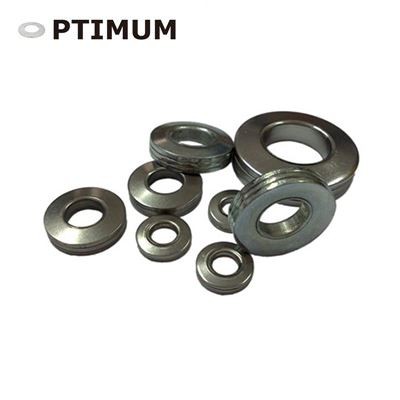
The answer to whether TREP French Spring Washers are easy to remove is not a straightforward yes or no. It depends on a combination of factors including the installation method, environmental conditions, and the materials used. When installed correctly and used in suitable environments, these washers can be removed relatively easily with basic hand tools. However, in adverse conditions such as corrosion – prone environments or cases of over – tightening, removal can be a challenge and may require specialized tools and techniques.
Conical Spring Washer As a supplier of TREP French Spring Washers, I understand the importance of easy maintenance and replacement. That’s why we are committed to providing high – quality washers that are designed to perform well in various conditions. If you are in need of TREP French Spring Washers for your industrial applications, or if you have any questions regarding their installation, removal, or other aspects, I encourage you to reach out. We are here to assist you in making the right choice and ensuring a smooth procurement process. Don’t hesitate to contact us for more information and to start a business discussion.
References
- "Handbook of Fasteners and Their Applications" by Hermann Hinterhoelzl
- "Fasteners and Joints Technology" research papers in the Journal of Mechanical Engineering
Yangzhou Optimum Spring Manufacturing Co., Ltd.
As one of the most professional trep french spring washers manufacturers and suppliers in China, we’re featured by quality products and good service. Please rest assured to buy customized trep french spring washers made in China here from our factory. For more information, contact us now.
Address: No.9 West of Shuangtang Rd, Yangzhou, P.R. China 225000
E-mail: susie@optimum-spring.com
WebSite: https://www.optimum-spring.com/
