If you’re sourcing power fittings for your next project—whether it’s for a utility grid upgrade, a commercial solar farm, or an industrial power distribution build—you’ve probably wondered: “Wait, what international certifications actually matter here?” As a power fittings supplier, I get this question all the time, and it’s not just a random ask. Cutting corners on uncertified fittings can lead to major headaches: from line outages that cost you thousands in downtime, to safety hazards that put your team at risk, to compliance fines that derail your timeline entirely. Let’s break down the key international certifications that separate the reliable power fittings from the ones you should leave on the shelf, no jargon, no fluff—just straight talk. Power Fittings
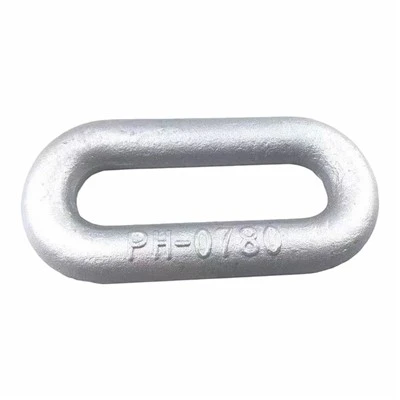
First, let’s ground this: power fittings (the connectors, lugs, clamps, terminals, and hardware that hold power lines together) aren’t one-size-fits-all. They work with copper and aluminum conductors, operate in harsh environments (think coastal salt air, desert heat, cold mountain winters), and have to meet global standards that ensure they won’t fail when you need them most. The certifications we’re talking about aren’t just labels—they’re proof that a third party has tested the product for everything from tensile strength to corrosion resistance.
Start with the big one most global projects ask for: IEC 61284. That’s the International Electrotechnical Commission’s standard for overhead line fittings, and it’s basically the gold standard for cross-border work. If a power fitting is IEC 61284-certified, it means it’s passed tests for mechanical load capacity, temperature cycling, corrosion resistance, and electrical performance. For example, a bolted aluminum connector for a 132kV line doesn’t just fit the conductor—it’s been pulled to 95% of the conductor’s rated breaking strength to make sure it won’t snap in high winds or ice loads. I’ve had clients in the Middle East refuse any fitting that isn’t IEC 61284 because the region’s extreme heat and dust will make low-quality parts fail fast. The cool part? This certification is recognized in over 50 countries, from Europe to Southeast Asia, so it’s your ticket to bidding on international projects without re-testing every component.
Next up, if you’re working with low-voltage power fittings (like those for residential electrical panels, commercial wiring, or backup generators), look for UL Listed—specifically UL 486A and UL 486B. UL (Underwriters Laboratories) is a US-based certifier, but their standards are adopted in Canada, Mexico, and even many parts of the Caribbean. UL 486A covers connectors for copper conductors, and 486B is for aluminum. What do these tests entail? They put fittings through 10,000 temperature cycles (heating up to 85°C, cooling down to -40°C) to check for loose connections, test for corrosion in salt spray, and even simulate long-term use with 1,000 hours of electrical load. A lot of cheap off-brand fittings skip these tests, so when a UL client calls us, we always make sure their fittings are labeled clearly—no confusion. I once had a customer come to us after a fire in a new office building; the original fittings used weren’t UL Listed, and the loose connection had overheated the wire. Don’t let that be you.
If your project is in Europe or the EU, you’ll need CE marking. Wait, CE isn’t a standard—it’s a conformity mark, but it means the product meets all relevant EU safety, health, and environmental requirements. For power fittings, the key standards under CE are EN 61284 (the EU-adopted version of the IEC overhead line standard) and EN 60947 for low-voltage connectors. One thing people get wrong: CE isn’t just a sticker. A third-party notified body (like TÜV SÜD or Dekra) has to audit the manufacturer’s production process and test samples to make sure every batch meets the rules. We’ve had buyers from Germany insist on CE-marked fittings because EU regulators will reject unmarked products at customs—no exceptions. So if you’re shipping to the EU, don’t waste time on fittings without proper CE certification.
Another niche but critical certification: CSA C22.2 No. 182, which is for Canadian electrical fittings. Canada’s cold climate and variable power grid have specific testing requirements that differ a bit from the US. For example, CSA tests fittings for low-temperature performance down to -55°C, which is way lower than UL’s -40°C for many low-voltage parts. If you’re working on a project in Northern Canada or Alaska, this is non-negotiable. I had a client building a transmission line in Yukon try uncertified fittings once; when temperatures dropped to -48°C, the plastic insulation on the connector cracked, causing a outage. Since then, they only source CSA-certified parts from us. It’s a small extra cost up front, but it avoids costly repairs in remote, hard-to-access areas.
Wait, what about renewable energy projects? Solar farms, wind turbines, and battery energy storage systems (BESS) use power fittings too, and they have their own certifications. For solar-specific fittings, look for PV CERT. That’s from IEC, and it tests parts for UV resistance (solar panels are in the sun 24/7), long-term weathering, and electrical performance in DC circuits. Wind energy fittings often need IEC 61400-24, which covers lightning protection—huge for turbines that are tall and exposed to storms. We’ve seen solar farms go down because their fittings weren’t UV-resistant, turning brittle and breaking after two years of sun. PV CERT ensures that won’t happen.
Now, let’s talk about common myths I hear from buyers: “Certified is too expensive” or “All certifications are the same.” Here’s the truth: certified power fittings might cost 5-10% more upfront, but they save you way more in the long run. A single line outage can cost a utility $10,000 per hour, according to industry data—so a cheap uncertified fitting that fails after a year ends up costing 10x more than a certified one that lasts 20+ years. And not all certifications are equal. A random “certification” from a no-name lab is just a label—make sure it’s from a reputable third party: IEC, UL, CSA, TÜV, or equivalent. We’ve had clients show us fittings with a fake “CE” sticker, and those never pass customs in the EU.
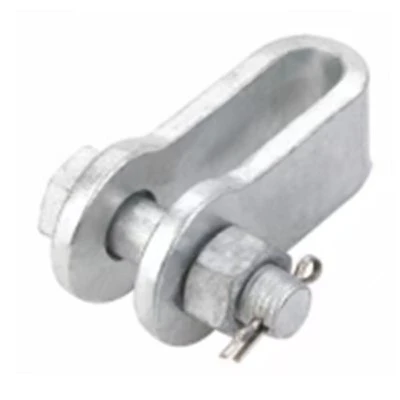
As a power fittings supplier, I don’t just sell parts—I help you pick the right ones for your project. We work with all these certifications, and we can provide full test reports for every fitting, so you don’t have to do the legwork. If you’re a project manager, electrical contractor, or procurement lead looking to avoid delays, safety risks, and compliance issues, let’s chat. We can walk you through exactly which certifications you need for your specific project, whether it’s a grid upgrade in the Middle East, a solar farm in Canada, or a commercial build in the EU. Don’t waste time on untested parts—reach out to us to connect on your power fitting needs.
Power Fittings References:
- IEC Standard 61284:2020, Overhead line fittings – Requirements and test methods.
- UL Standard 486A-1:2022, Connectors and terminals for electrical equipment – Part 1: Fast-on, solderless, and pressure connectors for copper conductors.
- CSA Standard C22.2 No. 182-2021, Electrical fittings for use in hazardous locations.
- European Commission, “CE Marking Guide for Electrical Equipment”, 2023.
- International Energy Agency (IEA), “Grid Connection Requirements for Renewable Energy Projects”, 2022.
Hebei Tongchuang Power Fittings Co., Ltd.
With abundant experience, we are one of the most professional power fittings manufacturers and suppliers in China. Please feel free to buy advanced power fittings for sale here from our factory. Good service and quality products are available.
Address: Houxiaohan Industrial Zone, Xingbieying Town, Hejian City, Hebei Province, P.R. China
E-mail: tongchuangepf@gmail.com
WebSite: https://www.tongchuangpower.com/
