Hey there! I’m a supplier of Spiral Ultrafiltration Membranes, and today I wanna chat about what the principle of these membranes is. Spiral Ultrafiltration Membrane
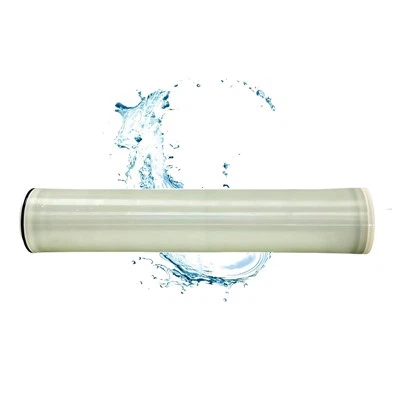
So, let’s start from the basics. Ultrafiltration is a pressure – driven membrane separation process. The spiral ultrafiltration membrane is a key component in this process, and it works based on some pretty cool principles.
The Structure of Spiral Ultrafiltration Membrane
First off, the structure of the spiral ultrafiltration membrane is crucial to understanding how it works. It’s made up of a membrane sheet, a permeate spacer, and a feed spacer, all wound around a central perforated tube. This spiral configuration gives it a large surface area in a relatively small volume.
The membrane sheet is the heart of the system. It’s a thin, semi – permeable layer that has tiny pores. These pores are what allow certain substances to pass through while blocking others. The size of these pores is typically in the range of 0.001 to 0.1 micrometers.
The permeate spacer is there to create a channel for the filtered fluid, or the permeate, to flow towards the central tube. On the other hand, the feed spacer helps distribute the feed solution evenly across the membrane surface.
The Separation Principle
Now, let’s talk about how the separation actually happens. When we feed a solution into the spiral ultrafiltration membrane module, we apply pressure. This pressure is the driving force that pushes the solution through the membrane.
The membrane acts as a sieve. Smaller molecules and particles that are smaller than the pore size of the membrane can pass through and become part of the permeate. These can include water, salts, and small organic molecules.
Larger molecules and particles, like proteins, colloids, and bacteria, are too big to pass through the pores. They get retained on the feed side of the membrane. This is called the retentate.
For example, in a water treatment application, if we’re trying to remove bacteria and large organic matter from water, the bacteria and big organic molecules will be retained in the retentate, while the clean water will pass through the membrane as the permeate.
Factors Affecting the Performance
There are several factors that can affect the performance of the spiral ultrafiltration membrane.
Pressure: As I mentioned before, pressure is the driving force. Higher pressure generally means a higher flux, which is the rate at which the permeate passes through the membrane. But there’s a limit. If the pressure is too high, it can cause membrane compaction, which reduces the pore size and can lead to a decrease in flux over time.
Temperature: Temperature also plays a role. Higher temperatures usually increase the flux because the viscosity of the solution decreases. However, if the temperature is too high, it can damage the membrane material.
Concentration of the Feed Solution: A higher concentration of the feed solution can lead to fouling. Fouling is when particles and molecules accumulate on the membrane surface or in the pores, which reduces the membrane’s performance. To prevent fouling, we often use pre – treatment steps, like sedimentation or microfiltration, to remove large particles before the solution reaches the ultrafiltration membrane.
Applications of Spiral Ultrafiltration Membrane
The spiral ultrafiltration membrane has a wide range of applications.
Water Treatment: It’s widely used in water treatment plants. It can remove suspended solids, bacteria, and some viruses from water. This makes the water suitable for drinking, industrial processes, or even for reuse in certain applications.
Food and Beverage Industry: In the food and beverage industry, it can be used for clarifying juices, removing bacteria from milk, and concentrating proteins in whey.
Biotechnology: In biotechnology, it’s used for separating and purifying biomolecules, like proteins and enzymes.
Maintenance and Long – term Performance
To keep the spiral ultrafiltration membrane working well in the long term, proper maintenance is essential.
Regular cleaning is a must. We can use physical cleaning methods, like backwashing, where we reverse the flow of the fluid through the membrane to remove the accumulated particles. Chemical cleaning can also be used. We use specific chemicals to dissolve the fouling substances on the membrane surface.
It’s also important to monitor the operating conditions, like pressure, temperature, and flux. By keeping an eye on these parameters, we can detect any problems early and take corrective actions.
Why Choose Our Spiral Ultrafiltration Membranes
As a supplier, I can tell you that our spiral ultrafiltration membranes have some great advantages.
We use high – quality membrane materials that are durable and have a long lifespan. Our membranes are designed to have a high flux and good rejection rates, which means you can get a large amount of clean permeate while effectively removing the unwanted substances.
We also offer excellent technical support. If you have any questions about installation, operation, or maintenance, our team of experts is always ready to help.
Conclusion

In conclusion, the principle of the spiral ultrafiltration membrane is based on the pressure – driven separation of substances through a semi – permeable membrane with specific pore sizes. It’s a powerful technology with a wide range of applications.
Hollow Fiber Ultrafiltration Membrane If you’re in the market for spiral ultrafiltration membranes, whether it’s for water treatment, food and beverage processing, or biotechnology, I’d love to have a chat with you. We can discuss your specific needs and see how our products can meet them. Don’t hesitate to reach out for a purchase and negotiation. Let’s work together to find the best solution for your filtration needs.
References
- Cheryan, M. Ultrafiltration Handbook. Technomic Publishing Company, 1986.
- Mulder, M. Basic Principles of Membrane Technology. Kluwer Academic Publishers, 1996.
- Baker, R. W. Membrane Technology and Applications. John Wiley & Sons, 2004.
Hangzhou Nanoimp Environmental Technology Co., Ltd.
With abundant experience, we are one of the most professional spiral ultrafiltration membrane manufacturers and suppliers in China. Welcome to wholesale high quality spiral ultrafiltration membrane in stock here and get pricelist from our factory. We also accept customized orders.
Address: Road 25, Baiyang Street, Qiantang District, Hangzhou City, Zhejiang Province
E-mail: keith.wang@nano-sepmer.com
WebSite: https://www.nanoimp-membrane.com/
