Hey there! I’m an actual person working at a gaskets supply business, and today, I wanna chat about how to measure a gasket. It’s gonna be super practical, and I’ll share some real – world insights along the way. Gaskets
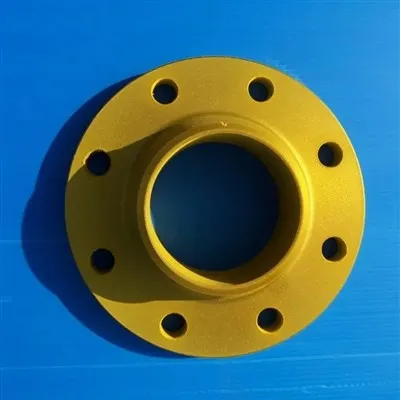
First off, why is measuring a gasket so important? Well, a gasket’s job is to create a seal between two surfaces, whether it’s in a car engine, a plumbing system, or an industrial machine. If it’s not measured correctly, it won’t seal properly. That can lead to leaks, loss of pressure, and even equipment failure. And trust me, that’s bad news for everyone involved.
Let’s start with the basic tools you’ll need. You don’t need a fancy lab full of high – tech gadgets. A good old – fashioned ruler or a caliper will do the job in most cases. A ruler is simple and easy to use. You can find one at any hardware store. A caliper, on the other hand, is a bit more precise. It can measure small distances accurately, which is great for gaskets with tight tolerances.
Measuring the Outer and Inner Diameters
If you’re dealing with a circular gasket, the first thing you’ll want to measure is the outer and inner diameters. The outer diameter is the distance across the gasket from one outer edge to the opposite outer edge, passing through the center. To measure it, place your ruler or caliper across the widest part of the gasket. Make sure it’s centered, or you’ll get an inaccurate measurement.
The inner diameter is the distance across the hole in the middle of the gasket. Again, use your measurement tool, and make sure it’s centered correctly. Write down these measurements, and be as precise as you can. For example, if the outer diameter is 3.25 inches and the inner diameter is 1.5 inches, note that down exactly.
Measuring the Thickness
The thickness of a gasket is also crucial. A gasket that’s too thin might not create a good seal, while one that’s too thick could cause problems with fitting. To measure the thickness, place your caliper or ruler at the edge of the gasket. Make sure it’s perpendicular to the surface of the gasket. Take the measurement at a few different points around the gasket, because sometimes the thickness can vary slightly.
Average out these measurements to get a more accurate result. For instance, if you measure the thickness at three points and get 0.1 inches, 0.11 inches, and 0.09 inches, add them up (0.1 + 0.11+ 0.09 = 0.3) and divide by the number of measurements (0.3 / 3 = 0.1 inches). So, the average thickness is 0.1 inches.
Measuring the Width for Rectangular Gaskets
For rectangular gaskets, instead of diameters, you’ll measure the length and the width. Use your ruler or caliper to measure the longest side of the rectangle for the length and the shorter side for the width. Just like with circular gaskets, be as precise as possible. If you’re measuring a gasket that has rounded corners, measure from the straight part of the sides.
Measuring the Hole Pattern
Some gaskets have holes in them, and measuring the hole pattern is important too. First, count the number of holes. Then, measure the distance between the centers of adjacent holes. This is called the pitch. You can use a ruler or caliper to measure the pitch. Also, measure the diameter of the holes themselves.
For example, if you have a gasket with four holes and the pitch between each hole is 1 inch, and the holes have a diameter of 0.25 inches, you’ve got important information that will help you get the right gasket.
Measuring the Material
The material of the gasket is another key factor. Different materials have different properties. For example, rubber gaskets are flexible and good for sealing against liquids and gases. Metal gaskets are more rigid and can handle high temperatures and pressures.
To figure out what material a gasket is made of, you can do a few simple tests. If it’s rubber, it will be stretchy. You can try gently pulling on it to see how much it stretches. If it’s metal, it will be hard and won’t stretch at all. You can also look at the color and texture of the material.
Some gaskets are made of composite materials, which combine the properties of different materials. In these cases, it might be a bit harder to tell what the material is just by looking at it. You might need to consult a material expert or use more advanced testing methods.
Measuring for Custom Gaskets
If you need a custom – made gasket, the measuring process is a bit more involved. You’ll need to provide detailed measurements and specifications. This includes not only the dimensions like diameters, thickness, and hole patterns but also the operating conditions it will be used in.
For example, if the gasket will be used in a high – temperature environment, you need to tell the supplier the maximum temperature it will be exposed to. If it will be in contact with certain chemicals, list those chemicals. This information is crucial for the supplier to choose the right material and manufacturing process.
Common Mistakes to Avoid
One common mistake is not measuring from the correct points. For example, when measuring the diameter of a circular gasket, if you don’t measure across the center, you’ll get a wrong measurement. Another mistake is not taking multiple measurements. As I mentioned earlier, the thickness of a gasket can vary slightly, so taking just one measurement might not give you an accurate result.
Also, don’t forget to account for any tolerances. Tolerances are the acceptable amount of variation in a measurement. For example, if a gasket is supposed to have a thickness of 0.1 inches with a tolerance of ±0.01 inches, it means the actual thickness can be anywhere from 0.09 inches to 0.11 inches.
Why Choose Our Gaskets
Now, I know you’re probably thinking, "Why should I choose your gaskets?" Well, we’ve been in the business for a long time, and we know our stuff. We have a wide range of gaskets in different sizes, materials, and shapes. Whether you need a standard gasket or a custom – made one, we can help.
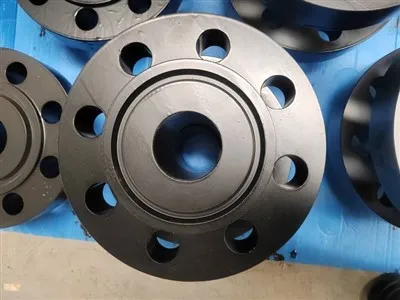
Our team of experts is always ready to assist you with the measuring process. If you’re not sure how to measure a gasket or what type of gasket you need, just give us a shout. We’ll guide you through the whole process and make sure you get the right gasket for your application.
Let’s Connect
Gost 33259 Flange If you’re interested in purchasing gaskets or need more information about measuring them, don’t hesitate to reach out. We’re here to make your gasket – buying experience as smooth as possible. Whether you have a small project or a large – scale industrial application, we’ve got the gaskets you need.
References
- Machinery’s Handbook: A comprehensive reference for mechanical engineering, which includes information on measuring gaskets and other mechanical components.
- Rubber and Plastics Technology Manual: This manual provides detailed information on the properties and measurement of rubber and plastic gaskets.
- Industrial Sealing Handbook: A great source for information on different types of gaskets, their applications, and proper measurement techniques.
Shanxi Xinshunda Flange Manufacturing Co., Ltd.
As one of the most professional gaskets manufacturers and suppliers in China, we also support customized service with competitive price. We warmly welcome you to wholesale high quality gaskets for sale here from our factory. For quotation, contact us now.
Address: Zhunagli Industrial Zone,jinchang Town,dingxiang,shanxi,china
E-mail: sales01@xinflange.com
WebSite: https://www.xinflange.com/
