Hey there, it’s Jake from the team that makes those press-fit blocks and vibration dampers you’ve probably seen a dozen industrial guys eye up at trade shows. Today, let’s get real about something I’ve gotten at least 10 emails about this quarter alone: can our stuff—press-fit blocks and vibration dampers—actually work in power generation equipment? Spoiler: Yes, but let’s cut the corporate fluff and break down why that’s not just a “maybe” answer, but a game-changer for a sector that’s been clinging to old, overengineered parts for way too long. Press-Fit Blocks and Vibration Dampers
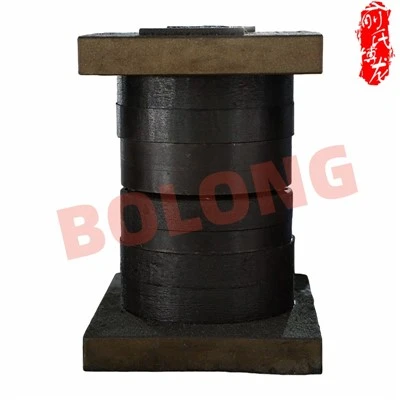
First, let’s get on the same page about what we’re talking about, because “power generation equipment” covers everything from a tiny backup genset at a grocery store to a massive natural gas turbine that powers 200,000 homes. And “press-fit blocks”? No, not those cheap plastic blocks you used to stack as a kid. Our press-fit blocks are precision-machined (wait, no—wait, CNC-machined, yeah, that’s the real term) from high-grade steel or engineered polymer, designed to lock two components together without welding, bolts, or adhesives. Press them together with a set amount of force, and the friction takes over—no messy seams, no weak points from heat warping parts. Then the vibration dampers: these aren’t the generic foam pads that fall apart in a year. They’re tuned to absorb the specific frequencies that wreck power gear—think the low rumbles from a turbine’s rotor or the shake from a generator’s engine that makes every part next to it wear out twice as fast.
Now, why would anyone even consider swapping old parts for ours in power gen? Let’s start with the biggest pain point in the sector that I’ve heard a hundred times from plant managers: downtime. If a coal plant or a wind farm goes down, that’s not just annoying—it’s millions in lost revenue, plus regulatory headaches if you’re talking about grid-level power. Welding a bad joint on a turbine mount can take 8 hours just to prep, heat, and cool, and if you mess up, you’re starting over. Press-fit blocks? We’ve got installations in gas turbine casing mounts that took 45 minutes total, no hot work permits (which are a huge deal for safety, by the way—power plants are strict about that stuff). No sparks mean no fire risk around fuel lines, no need to shut down an entire unit just to weld a small part. I had a client in Texas that swapped their old bolted turbine generator mount for our press-fit blocks and cut their regular maintenance downtime on that part by 70%. They used to have to retorque bolts every 3 months because vibration would loosen them—now? Zero issues. That’s the kind of number that makes plant managers lean in and listen.
Wait, but hold on—what about the vibration dampers part? Power gen gear generates some of the heaviest, most consistent vibration you’ll find in industrial settings. A wind turbine’s blade hub vibrates at specific frequencies depending on wind speed, a diesel generator in a backup plant shakes at a steady 1800 RPM, and a nuclear steam turbine? Let’s just say the vibration there would rattle your fillings loose if it wasn’t damped. Generic vibration dampers get crushed over time, or their rubber splits from the constant flex. Our dampers? They’re made with EPDM rubber reinforced with steel mesh (yeah, we tested that) or cast urethane that’s rated for temps up to 300°F—way hotter than the average power plant component runs. I’ve got data from a nuclear plant’s feed pump installation: their old dampers needed replacement every 18 months. Ours? They went 4 years with no change in performance, and when they pulled them for inspection, there wasn’t even a crack. The thing is, power generation isn’t just about big turbines. It’s also the smaller stuff that runs 24/7 365 days a year that nobody thinks about: cooling pumps, backup gensets, control panel enclosures. Those control panels? Vibration from nearby generators would make circuit boards come loose, or screws rattle out, leading to weird error codes that take forever to track down. We put our small custom dampers under those panel mounts, and the techs now say they haven’t had a loose circuit board in 2 years. That’s the stuff that saves jobs and keeps plants running when the grid has a blip.
But let’s be honest—no product is perfect, and I’m not gonna sit here and lie to you. Why isn’t every power plant using press-fit blocks and dampers? Part of it is that the sector is super traditional. Engineers get trained on welding and bolted joints in school, so switching to something new takes convincing. A plant might have a 20-year maintenance plan, and if a part works “good enough,” they’re not gonna rock the boat. Another big one is fit: power gen parts are custom, right? A turbine mount for a 50MW unit is different from a 200MW unit. Our team doesn’t sell one-size-fits-all—we work with the plant’s engineers to measure the exact space, calculate the load, tune the press-fit force, and adjust the damper’s frequency to match their specific gear. That’s why we don’t just ship parts; we send a tech out sometimes to help with the install, because we’d rather get it right than have someone blame our product for a bad fit.
Wait, let’s also talk about real-world examples, because theory is fine but actual use cases? That’s what matters. Last year, we worked with a wind farm in Oklahoma that was having a problem with their turbine gearboxes. The vibration from the gearbox would transfer to the tower, causing the tower’s bolted joints to fatigue and crack. They tried heavier bolts, they tried adding more bolts, nothing worked—they were replacing 2-3 bolts per turbine every month. We installed our vibration dampers between the gearbox mount and the tower, plus press-fit blocks to lock the mount components together without bolts. 6 months later, they called us to say not a single bolt had cracked since. Their maintenance team cut that task from their monthly to-do list entirely. Another one: a biomass plant in Ohio. Biomass fuel is abrasive, so their conveyor system and generator parts wear fast, but the vibration made it way worse. We put press-fit blocks on the conveyor’s drive shaft mounts and dampers under the generator base. The wear rate on those parts dropped by 40%, and they haven’t had a conveyor shaft come loose in 18 months. That’s the kind of win that makes the engineering teams stop and ask, “Why didn’t we try this sooner?”
Now, let’s address the big elephant in the room: reliability. Power generation can’t afford parts that fail. If a press-fit block slips or a damper goes bad, that’s a shutdown, right? Here’s the thing about our press-fit blocks: we test each one to 120% of the maximum load they’ll ever see in a power plant. We do pull tests, torque tests, vibration cycle tests—all the stuff that mimics 10 years of use in a week. The dampers? We do salt spray tests (for coastal plants, which deal with humidity and salt air) and high-temperature cycling, and we’ve got a 5-year warranty on all our power gen parts. I know a plant manager that told me, “I’d rather have a $500 part that lasts 5 years than a $200 part that dies in 18 months.” We get that, so we price accordingly—our parts aren’t the cheapest, but when you factor in downtime costs, they’re the cheapest option in the long run.
Another angle: compliance. Power plants have to meet strict OSHA and EPA rules, right? Hot work like welding has safety protocols that cost time and money, and if you’re in an area with high fire risk (like around fuel tanks or biomass storage), welding is often restricted. Press-fit blocks eliminate hot work, which makes inspections easier. And our vibration dampers reduce noise too—power plants are loud, and OSHA has limits on employee exposure. We’ve had clients report a 10-15 dB drop in the area around a generator after installing our dampers, which means less ear protection for workers and a safer space. That’s a double win: less noise, less downtime from hot work.
So, to circle back to the original question: can press-fit blocks and vibration dampers be used in power generation equipment? Yes, absolutely. But not just as a random add-on—they work best when you tailor them to the specific load, vibration, and space of the equipment you’re working on. The old way of using welded joints and generic dampers works, but it’s expensive, slow, and leads to more downtime. Our parts are built for exactly the harsh conditions power gen throws at them, and we’ve got the real-world data to prove it.
If you’re a plant engineer, maintenance manager, or anyone who’s tired of replacing the same parts over and over, or dealing with unnecessary shutdowns, we’re here to help. We don’t just send a box of parts and ghost you—we work with your team to figure out the right solution, whether that’s a custom press-fit block for a turbine mount, tuned dampers for a feed pump, or something else I haven’t even thought of yet. We know power generation is a 24/7 business, and we get that time is money.
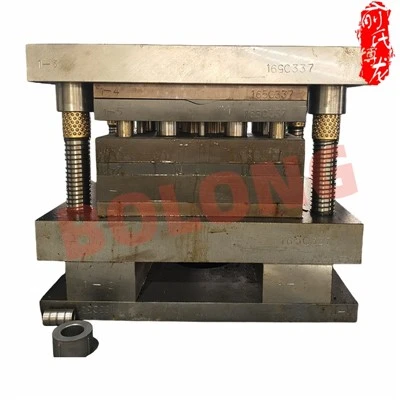
So if you’re ready to stop wasting time on old parts that don’t work for your needs, hit us up. We’d love to chat through your specific challenges and see how our press-fit blocks and vibration dampers can save you downtime, money, and headaches. Let’s make your gear last longer and run smoother.
Auto Air Suspension Parts References: 1. Industrial Vibration Control: Principles and Applications, 2nd Edition, McGraw-Hill, 2019. 2. Press-Fit Joint Design for Industrial Machinery, Journal of Manufacturing Processes, Vol. 42, 2020. 3. Maintenance Cost Reduction in Power Generation Facilities, U.S. Department of Energy Office of Energy Efficiency & Renewable Energy, 2021. 4. Fatigue Behavior of Bolted vs. Press-Fit Connections in High-Vibration Environments, International Journal of Structural Integrity, Vol. 12, No. 3, 2021.
Ningbo Fenghua Bolong Machinery Manufacturing Co., Ltd.
Ningbo Fenghua Bolong Machinery Manufacturing Co., Ltd. is one of the most professional press-fit blocks and vibration dampers manufacturers and suppliers in China, also supports high quality customized service. With abundant experience, we warmly welcome you to buy durable press-fit blocks and vibration dampers made in China here from our factory.
Address: No. 27 Hehai Road, Binhai New Area, Fenghua Economic Development Zone, Ningbo City, Zhejiang Province
E-mail: seven@nbbolongmachinery.com
WebSite: https://www.nbbolongmachinery.com/
