If you’ve ever browsed yarn for a knitting project, picked up a spool of thread for sewing, or even noticed how textile factories crank out fabric for everything from t-shirts to bed linens, you’ve probably wondered: how do all those different yarns get made? Spoiler alert, it’s not just one machine doing all the work. As a yarn making machine supplier who’s been in this game for over a decade, I’ve seen so many clients mix up the different types of equipment—and that leads to tons of headaches, from wrong orders for their mill’s capacity to making the wrong yarn for their target market. Today, let’s break down the main yarn making machines, what they’re actually for, and how to pick the right one (no stuffy industry jargon, promise). Yarn Making Machine
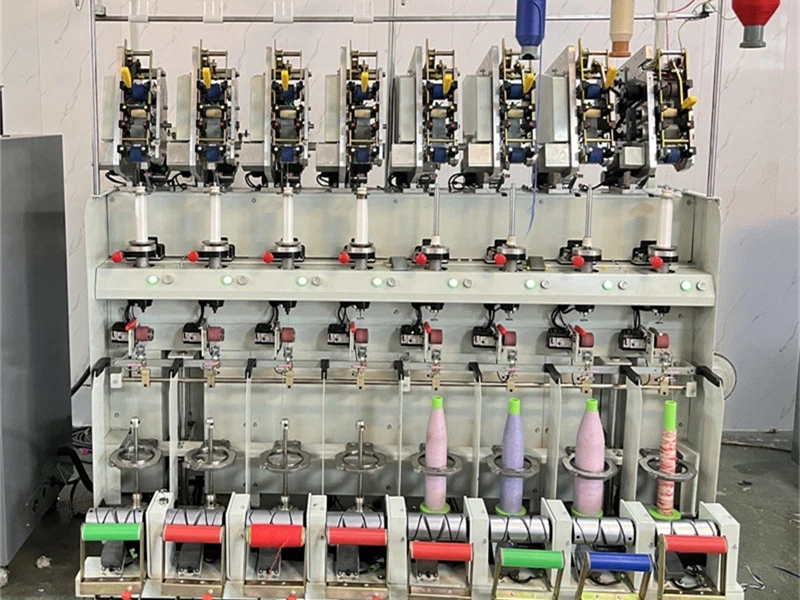
First, let’s get one thing straight: yarn isn’t just “thread.” There’s spun yarn (the fuzzy, soft kind for sweaters), filament yarn (smooth, strong, the stuff that’s used for socks or drapery), and even fancy yarns (think bouclé or slub yarn) that make fabrics pop. Each of these needs a totally different machine to produce, so let’s start with the most basic workhorses: spinning machines.
Most people hear “yarn making” and immediately think of spinning machines, and that’s for good reason—they’re the backbone of turning raw fibers (cotton, wool, polyester, whatever) into actual yarn. But wait, not all spinning machines are the same! The two big ones you’ll hear about are ring spinning machines and open-end (or rotor) spinning machines, and they’re night and day for what they produce.
Ring spinning is the OG, the machine that’s been around for over 150 years, and it’s still the gold standard for high-quality yarn. Here’s the gist: you feed clean, aligned fibers into the machine, which twists them together as they’re wound onto a spool. What makes it special is that it twists the yarn extremely tightly, so the final product is durable, strong, and has that soft, uniform feel that people love for things like premium sweaters, fine cotton shirts, or socks that don’t pill after a few washes. The downside? It’s slow. A single ring spindle only makes a little yarn per hour, so it’s better for small to mid-sized mills that focus on higher-end, custom yarns rather than cranking out millions of yards for big fast-fashion brands. I talk to a lot of small knitting yarn brands who swear by ring spinning machines, because their customers pay extra for that consistent, soft yarn.
Then there’s open-end (rotor) spinning, which is the workhorse for mass-produced yarn. This one is way faster—like, 5x faster than ring spinning—because it doesn’t spin each individual spool slowly. Instead, it takes loose fibers, throws them into a fast-spinning rotor (that’s where the name comes from), and twists them into yarn in one go. The result is a slightly coarser, less uniform yarn, which is perfect for things like t-shirt fabric, denim, or bed linens that don’t need that super tight twist. The big plus here is that it’s way more cost-effective for large-scale production, so if you’re a mill churning out millions of yards of basic cotton yarn every month, this is the machine you want. I’ve had several big textile clients switch from ring to open-end when they landed a huge contract with a fast-fashion brand, and they saved a ton on overhead. But fair warning: if you try to make a premium sweater yarn on an open-end machine, it’ll be fuzzy and uneven, and your customers will notice.
Now, if you’re working with filament yarn—like the smooth, shiny stuff used in lingerie, drapery, or even surgical sutures—you need a totally different machine: filament spinning machines. There are a few subtypes here too, but the two most common are melt spinning and wet spinning, and they’re used for different synthetic fibers (though melt spinning is also used for some semi-synthetics). Melt spinning is the fast one: you melt plastic pellets (like polyester or nylon), push the melted goop through tiny holes in a spinneret (that metal plate with hundreds of pinholes), and the hot strands cool and solidify into filament yarn immediately. It’s super efficient, works for thermoplastic fibers, and is what most big brands use for everyday polyester and nylon yarn. Wet spinning, on the other hand, is for fibers that can’t be melted without breaking down—like viscose (rayon) or acrylic. You dissolve the raw material into a liquid, push it through a spinneret into a chemical bath, and it solidifies into filament that way. It’s slower than melt spinning, but the resulting yarn is more flexible and has that soft, natural feel that people like for sustainable fabrics. I recently helped a startup that makes viscose activewear pick a wet spinning machine for their small production line, because melt spinning would’ve made their viscose feel cheap and plasticky.
Wait, but what about that fancy yarn you see—bouclé with little loops, slub yarn with thick and thin spots, or chenille yarn with that fuzzy edge? Those don’t come from the spinning machines we talked about earlier. They use texturing or fancy yarn machines, which run after the basic spinning step. Texturing machines, for example, take regular filament yarn and twist it, heat it, or crimp it to make it stretchy and fluffy—think the yarn for those comfy, stretchy yoga pants. Fancy yarn machines, sometimes called novelty spinning machines, are what make those fun, decorative yarns. They feed multiple strands at once, so you can have a core yarn, a loop yarn, and a bouclé fiber all twisting together to make that unique, textured look. A lot of hand knitting yarn brands use these, because they can sell novelty yarn for a premium price for projects like scarves or blankets. I’ve had clients come to me wanting to start making their own novelty yarn to sell on Etsy, and I always walk them through what kind of texturing/fancy machine fits their budget and production volume—because you don’t need a huge industrial one if you’re only making a few spools a day.
Oh, and let’s not forget about the finishing machines! A lot of new mill owners I work with overlook these, but they’re just as important as the spinning part. Finishing machines are what take the raw yarn off the spinning machine and make it usable. There are winding machines, for example, which take the small, loose spools from the spinning machine and wind them into big, uniform cones (perfect for feeding into weaving or knitting machines). Then there’s twisting machines, which twist two or more yarns together to make a stronger, more durable yarn—like the yarn used for sewing thread, or heavy-duty fabric for work pants. Dyeing and finishing machines are also a big part, though some mills outsource that, but if you want to dye your own yarn, you need these to make sure the color is even and doesn’t bleed. I once had a client who skipped getting a good winding machine, and they spent weeks untangling yarn that got messed up when they tried to feed it into their knitting machines—total waste of time and money, so I always bring that up first.
Now, let’s talk about the real mistakes I see mill owners make all the time. A small boutique mill might buy an open-end spinning machine thinking it’s faster and cheaper, only to realize their customers want soft, fine yarn that open-end can’t make. Or a big mass-production mill might invest in a ring spinning machine, which is way too slow for their volume needs, and they end up losing money because they can’t keep up with orders. Another big one: mixing up filament and spun yarn machines. If you’re making cotton yarn, you need a spun yarn machine (ring or open-end), not a filament spinning one—filament machines make smooth, non-fuzzy yarn that’s totally wrong for cotton or wool.
The key here is to start with what kind of yarn you want to make, how much of it you need to produce, and what your target market is. If you’re making premium hand knitting yarn for small batches, go with a ring spinning machine, maybe a small novelty machine if you want to add some fun varieties. If you’re cranking out millions of yards of basic cotton or polyester yarn for t-shirts, bed linens, or denim, open-end spinning is the way to go. For filament yarn, pick melt spinning for synthetic fibers like polyester or nylon (fast, cheap, high-volume) and wet spinning for viscose or acrylic (softer, lower-volume). And never skip the finishing and winding machines—they might seem like an afterthought, but they’re what turn messy raw yarn into a product that works for your downstream equipment (looms, knitting machines) and your customers.
As a yarn making machine supplier, I work with mills of all sizes—from one-person boutique operations to huge international textile factories—so I’ve seen every kind of mix-up and success story. The worst part is when someone buys a machine that doesn’t fit their needs, wastes their money, and ends up having to upgrade sooner than they should. That’s why I always tell folks to reach out, tell me exactly what they want to make, how much they need to make, and who they’re selling to, and I can point them to the right machine, or even help them design a whole setup that fits their budget and goals. Whether you’re a small startup just getting off the ground or a big mill looking to expand your production, I don’t push the most expensive machine— I push the one that works for you.

If you’re tired of guessing which yarn making machine you need, don’t waste another month sifting through generic online info. Reach out, and we can chat through your specific needs, no pressure, no salesy jargon, just real advice from someone who’s been in this space for years. We can go over specs, production rates, cost, even what kind of support you’ll get after installation—because buying a machine is only half the battle, you need someone to help you keep it running when things go wrong.
References
Yarn Winding Machine Textile Institute. Yarn Manufacturing: Principles and Practice. Woodhead Publishing, 2020.
Kothari, V. K. Opening, Cleaning, and Carding: Preparation for Spinning. Textile Machinery Society, 2018.
Lindsay, D. R. Filament Spinning Technology: Melt, Wet, and Dry-Jet Wet Spinning. CRC Press, 2021.
Novelty Yarn Association. Guide to Specialty Yarn Production Equipment. Textile Trade Press, 2019.
Zhangjiagang Kingkangda Machinery Co., Ltd.
Zhangjiagang Kingkangda Machinery Co., Ltd. is one of the most professional yarn making machine manufacturers and suppliers in China, specialized in providing high quality customized service. We warmly welcome you to wholesale yarn making machine in stock here from our factory. Contact us for pricelist and quotation.
Address: Korea Industrial Park, Fenghuang Town, Zhangjiagang City, Jiangsu Province, China
E-mail: kingkangdacn@hotmail.com
WebSite: https://www.kingkangda.com/
