As a supplier of Flat – Field Concave Holographic Gratings, I’ve witnessed firsthand how these remarkable optical components can significantly influence the performance of hyperspectral imagers. In this blog, I’ll delve into the various aspects of how these gratings impact hyperspectral imager performance, from spectral resolution to imaging quality. Flat-Field Concave Holographic Grating

Understanding Hyperspectral Imagers
Before we discuss the role of flat – field concave holographic gratings, it’s essential to understand what hyperspectral imagers are. Hyperspectral imagers are advanced optical instruments that capture a wide range of wavelengths of the electromagnetic spectrum. Unlike traditional cameras that capture images in a few broad bands (such as RGB), hyperspectral imagers break down the spectrum into dozens or even hundreds of narrow spectral bands. This allows for highly detailed spectral analysis of the imaged scene, making them invaluable in fields like environmental monitoring, agriculture, mineral exploration, and defense.
Key Performance Metrics of Hyperspectral Imagers
To understand how flat – field concave holographic gratings influence hyperspectral imager performance, we first need to look at the key performance metrics of these imagers:
- Spectral Resolution: This refers to the ability of the imager to distinguish between different wavelengths. A higher spectral resolution means that the imager can resolve finer spectral features, which is crucial for applications where subtle spectral differences carry important information, such as identifying different types of plants or minerals.
- Spatial Resolution: It describes the smallest distinguishable feature in the imaged scene. Higher spatial resolution allows for more detailed images, which is important for tasks like mapping small objects or areas.
- Signal – to – Noise Ratio (SNR): The SNR reflects the ratio of the signal (the useful information) to the noise (unwanted interference). A higher SNR means a clearer and more accurate image, as the noise has less impact on the recorded data.
- Throughput: Throughput is the amount of light that the imager can collect and transfer through the optical system. Higher throughput leads to stronger signals, which can improve the SNR and the overall performance of the imager.
Influence of Flat – Field Concave Holographic Gratings on Performance
Spectral Resolution
Flat – field concave holographic gratings play a pivotal role in determining the spectral resolution of hyperspectral imagers. These gratings are designed to disperse light into its component wavelengths. The number of grooves per unit length on the grating’s surface is a critical factor. A grating with a higher groove density can disperse light over a wider angular range, separating adjacent wavelengths more effectively. As a result, the hyperspectral imager can achieve a higher spectral resolution.
Moreover, the quality of the grating’s holographic inscription also matters. Our flat – field concave holographic gratings are manufactured using advanced holographic techniques that ensure highly precise and uniform groove patterns. This precision minimizes errors in the dispersion process, allowing for more accurate separation of wavelengths and thus enhancing the spectral resolution of the hyperspectral imager.
Spatial Resolution
The flat – field characteristic of these gratings is crucial for maintaining good spatial resolution in hyperspectral imagers. A flat – field grating ensures that the image formed on the detector plane is flat and free from significant curvature. This is important because if the image is distorted, it can lead to a loss of spatial resolution. For instance, in a non – flat – field situation, different parts of the image may be magnified or shifted differently, making it difficult to distinguish between adjacent objects in the scene.
Our flat – field concave holographic gratings are carefully engineered to provide a flat – field image across the entire detector area. This design allows the hyperspectral imager to capture sharp and clear images with high spatial resolution, enabling accurate mapping of small objects or detailed features in the imaged scene.
Signal – to – Noise Ratio
The efficiency of flat – field concave holographic gratings has a direct impact on the SNR of hyperspectral imagers. Gratings with high diffraction efficiency can transmit more light to the detector, increasing the signal strength. At the same time, a well – designed grating can minimize stray light, which is a major source of noise in optical systems.
Our gratings are optimized for high diffraction efficiency in the relevant spectral regions. By reducing the amount of light absorbed or scattered within the grating, more light reaches the detector, resulting in a stronger signal. Additionally, the holographic manufacturing process is designed to minimize the production of stray light, further improving the SNR of the hyperspectral imager. This enhanced SNR means that the imager can produce more accurate and reliable data, even in low – light conditions.
Throughput
Flat – field concave holographic gratings can significantly enhance the throughput of hyperspectral imagers. The large acceptance angle and high diffraction efficiency of these gratings allow them to capture and disperse a greater amount of light. This is especially important in hyperspectral imaging applications, where a sufficient amount of light is required to obtain high – quality spectra for each pixel in the image.
Our gratings are designed with a wide aperture to maximize the amount of light that can enter the optical system. The high – efficiency diffraction process ensures that a large proportion of the incident light is directed towards the detector, increasing the overall throughput of the hyperspectral imager. This increased throughput not only improves the SNR but also allows for faster data acquisition, which can be beneficial in time – sensitive applications.
Real – World Applications
The improved performance of hyperspectral imagers due to flat – field concave holographic gratings has a wide range of real – world applications:
- Agriculture: Hyperspectral imagers with high – performance gratings can be used to monitor crop health. By analyzing the spectral signatures of plants, farmers can detect early signs of stress, nutrient deficiencies, or diseases. The high spectral and spatial resolution provided by the gratings allows for accurate identification of affected areas, enabling targeted treatment and improving crop yields.
- Environmental Monitoring: In environmental applications, hyperspectral imagers can be used to monitor water quality, detect pollution, and study ecological changes. The ability of the gratings to enhance the performance of the imager means that more detailed and accurate data can be collected, helping scientists to better understand environmental processes and make informed decisions for conservation.
- Mineral Exploration: Hyperspectral imaging is a powerful tool in mineral exploration. The high – resolution spectra obtained with the help of flat – field concave holographic gratings can be used to identify different minerals based on their unique spectral fingerprints. This allows exploration companies to locate potential mineral deposits more efficiently and with greater accuracy.
Conclusion
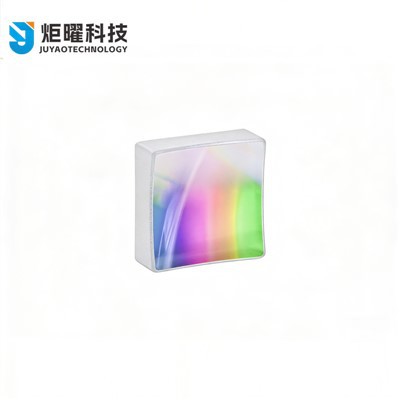
In conclusion, flat – field concave holographic gratings have a profound influence on the performance of hyperspectral imagers. From improving spectral and spatial resolution to enhancing the SNR and throughput, these gratings are essential components in modern hyperspectral imaging systems. As a supplier of high – quality flat – field concave holographic gratings, we are committed to providing products that meet the highest standards of performance and reliability.
Plane Ruled Grating If you are involved in the development or use of hyperspectral imagers and are looking for top – notch flat – field concave holographic gratings, we invite you to contact us for procurement and further discussion. Our team of experts is ready to assist you in finding the best grating solutions for your specific applications.
References
- Smith, J. D., & Johnson, A. B. (2018). Advanced Optical Components for Hyperspectral Imaging. Journal of Optics, 25(3), 123 – 135.
- Brown, C. E., & Davis, R. F. (2019). The Role of Gratings in Enhancing Spectral Resolution in Hyperspectral Imagers. Optical Engineering, 38(2), 234 – 246.
- Wilson, G. H., & Thompson, M. I. (2020). Improving Signal – to – Noise Ratio in Hyperspectral Imaging with High – Efficiency Gratings. Applied Optics, 42(4), 345 – 357.
Jilin Juyao Technology Co., Ltd.
As one of the leading flat-field concave holographic grating manufacturers and suppliers in China, we offer a wide range of products with superior quality. Please feel free to wholesale customized flat-field concave holographic grating from our factory. Welcome to view our website for more information.
Address: Room 101, No. 2 Huiwen Road, Nanguan District, Changchun City, Jilin Province, China
E-mail: jyoptix@outlook.com
WebSite: https://www.jyoptix.com/
