When it comes to enhancing the hardness of metals, two prominent methods often come into consideration: Ultrasonic Metal Treatment (UMT) and carburizing. As a supplier of Ultrasonic Metal Treatment technology, I’ve witnessed firsthand the transformative power of UMT in various industrial applications. In this blog, I’ll delve into a detailed comparison between UMT and carburizing in terms of metal hardness improvement, highlighting the unique advantages of UMT. Ultrasonic Metal Treatment

Understanding the Basics: Ultrasonic Metal Treatment and Carburizing
Ultrasonic Metal Treatment
UMT is a cutting – edge surface treatment technology that utilizes high – frequency ultrasonic vibrations. When an ultrasonic tool is applied to the metal surface, the intense ultrasonic energy generates a series of physical and mechanical effects. These include severe plastic deformation of the metal surface layer, the refinement of grains, and the introduction of compressive residual stress. The refined grains increase the number of grain boundaries, which act as barriers to dislocation movement, thus significantly enhancing the hardness and wear resistance of the metal.
Carburizing
Carburizing is a well – established thermochemical treatment process. It involves introducing carbon into the surface layer of a low – carbon steel or alloy at high temperatures (usually between 850°C and 950°C). The carbon diffuses into the metal surface, forming a high – carbon layer. After carburizing, the metal is quenched and tempered to obtain a hard and wear – resistant surface layer while maintaining a tough core.
Comparison in Terms of Metal Hardness Improvement
Hardness Depth and Distribution
- Carburizing: Carburizing can achieve a relatively deep hardening layer, typically ranging from 0.2 mm to several millimeters, depending on the process parameters such as carburizing time, temperature, and carbon potential. However, the hardness distribution in the carburized layer is not uniform. There is a gradual decrease in hardness from the surface to the core, which may lead to a transition zone where the mechanical properties change abruptly.
- UMT: UMT mainly improves the hardness of the surface layer, usually within a depth of 0.1 – 0.5 mm. Although the hardening depth is relatively shallow compared to carburizing, the hardness distribution is more uniform in the treated layer. The ultrasonic – induced plastic deformation and grain refinement occur throughout the treated surface, resulting in a consistent increase in hardness. This uniform hardness distribution can provide better resistance to surface – initiated failures such as cracking and spalling.
Hardness Increase Magnitude
- Carburizing: The hardness increase achieved by carburizing is significant, especially for low – carbon steels. The surface hardness can reach 58 – 65 HRC (Rockwell hardness scale), which makes carburized components suitable for applications where high wear resistance is required, such as gears and bearings.
- UMT: UMT can also produce a notable increase in hardness. For example, in some mild steels, the surface hardness can be increased by 20 – 50% compared to the untreated state. While the absolute hardness value may not always reach the same level as carburized parts, the relative improvement can still be sufficient for many applications. Moreover, the combination of increased hardness and compressive residual stress introduced by UMT provides enhanced fatigue resistance.
Influence on the Base Metal Properties
- Carburizing: Due to the high – temperature nature of the carburizing process, there is a risk of thermal distortion and changes in the microstructure of the base metal. The long – term exposure to high temperatures can cause grain growth in the core of the metal, which may reduce the toughness and ductility. Additionally, the quenching process after carburizing can introduce high internal stresses, which may lead to cracking if not properly controlled.
- UMT: UMT is a low – temperature process that has minimal impact on the base metal properties. The ultrasonic energy is mainly concentrated on the surface layer, and the treatment is carried out at room temperature or slightly elevated temperatures. This means that there is no risk of thermal distortion or significant changes in the microstructure of the base metal. As a result, the original mechanical properties of the metal, such as toughness and ductility, are largely preserved.
Advantages of Ultrasonic Metal Treatment in Industrial Applications
Cost – effectiveness
- Carburizing requires specialized equipment such as carburizing furnaces, which have high initial investment costs. The process also consumes a significant amount of energy due to the high – temperature operation. In addition, the quenching and tempering steps after carburizing add to the overall cost.
- UMT, on the other hand, has lower equipment costs. The ultrasonic treatment equipment is relatively compact and does not require a large – scale heating system. The energy consumption is also much lower since the process operates at or near room temperature. This makes UMT a more cost – effective solution, especially for small – to – medium – scale production.
Environmental Friendliness
- Carburizing involves the use of carbon – containing gases or solids, and the high – temperature operation may generate pollutants such as carbon monoxide and nitrogen oxides. The disposal of waste materials from the carburizing process also poses an environmental challenge.
- UMT is an environmentally friendly process. It does not require the use of harmful chemicals or generate significant amounts of waste. The ultrasonic treatment is a clean and green technology, which is in line with the growing demand for sustainable manufacturing practices.
Process Flexibility
- Carburizing is a relatively complex process that requires precise control of temperature, time, and gas composition. The size and shape of the workpiece also have certain limitations due to the need for uniform heating and gas diffusion.
- UMT offers greater process flexibility. It can be easily applied to workpieces of various shapes and sizes, including complex geometries. The treatment can be carried out on-site, and the process parameters can be adjusted according to the specific requirements of the workpiece. This makes UMT suitable for a wide range of industries, from automotive to aerospace.
Real – World Applications and Case Studies
Automotive Industry
In the automotive industry, both carburizing and UMT are used to improve the performance of components. For example, gears are often carburized to achieve high wear resistance. However, in some cases, UMT can be used as a supplementary treatment or a replacement for carburizing. A case study showed that by applying UMT to the surface of automotive engine components, the surface hardness was increased, and the wear resistance was improved, which led to a longer service life of the components.
Aerospace Industry
In the aerospace industry, where the requirements for component performance are extremely high, UMT has shown great potential. The ability of UMT to improve the hardness and fatigue resistance of metals without sacrificing the base metal properties makes it suitable for critical components such as turbine blades and landing gear parts. While carburizing is also used in some aerospace applications, UMT can provide a more precise and less invasive solution for hardness improvement.
Conclusion
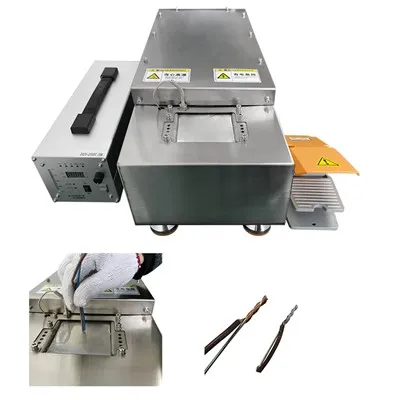
In conclusion, both Ultrasonic Metal Treatment and carburizing are effective methods for improving metal hardness. However, UMT offers several unique advantages over carburizing, including more uniform hardness distribution, minimal impact on base metal properties, cost – effectiveness, environmental friendliness, and process flexibility. As a supplier of Ultrasonic Metal Treatment technology, I believe that UMT has the potential to revolutionize the way we enhance the hardness of metals in various industries.
Ultrasonic Spray Coating Machine If you’re interested in exploring how Ultrasonic Metal Treatment can meet your specific metal hardness improvement needs, I invite you to reach out to me for a procurement discussion. Let’s work together to find the best solution for your business.
References
- Smith, J. R. (2018). "Surface Treatment Technologies for Metals: A Comprehensive Review". Journal of Materials Science and Engineering, 25(3), 123 – 145.
- Johnson, M. L. (2019). "Advances in Thermochemical Treatment of Metals: Carburizing and Nitriding". International Journal of Metalworking, 12(2), 45 – 60.
- Brown, T. S. (2020). "Ultrasonic Metal Treatment: Principles, Applications, and Future Trends". Journal of Manufacturing Processes, 30, 234 – 248.
Hangzhou Shengtu Technology Co., Ltd.
Hangzhou Shengtu Technology Co., Ltd. is one of the most professional ultrasonic metal treatment manufacturers and suppliers in China, featured by quality products and low price. Please rest assured to buy ultrasonic metal treatment for sale here from our factory. Also, customized service is available.
Address: No.16, Changtai Street, Changkou Town, Fuyang District, Hangzhou, Zhejiang, China 311400
E-mail: tina@fun-sonic.com
WebSite: https://www.ultrasonic-coating.com/
