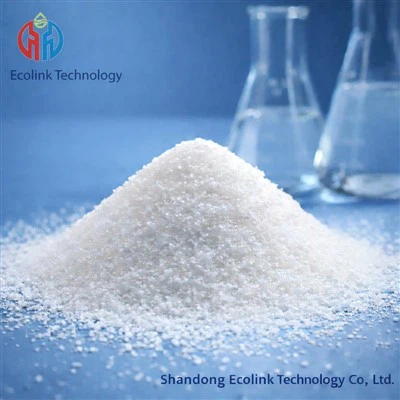
As a leading supplier of Cationic Polyacrylamide (CPAM) in the market, I’ve witnessed firsthand its transformative impact on the paper industry. In this blog, I’ll delve into the various applications of CPAM in papermaking, highlighting how this versatile polymer has revolutionized the production process and enhanced the quality of paper products. Cationic Polyacrylamide
1. Retention Aid
One of the primary applications of CPAM in the paper industry is as a retention aid. During the papermaking process, a significant amount of fine particles such as fillers, fibers, and additives are suspended in the pulp slurry. These fine particles can easily be lost with the water during the draining process, leading to increased production costs and decreased paper quality.
CPAM, with its cationic charge, can effectively interact with the negatively charged fine particles in the pulp. Through electrostatic attraction, CPAM forms bridges between the fine particles and the fibers, creating larger flocs. These flocs are more easily retained on the paper machine wire, reducing the loss of fine particles and improving the retention rate. As a result, the use of CPAM as a retention aid can significantly reduce the consumption of raw materials, such as fillers and fibers, while increasing the production efficiency.
Moreover, the improved retention of fine particles also contributes to better paper formation. The more uniform distribution of fillers and fibers in the paper sheet leads to a smoother surface, improved printability, and enhanced mechanical properties of the paper.
2. Drainage Aid
In addition to its role as a retention aid, CPAM also serves as an effective drainage aid in the papermaking process. The drainage of water from the pulp slurry is a crucial step in paper production, as it affects the speed of the paper machine and the quality of the final paper product.
CPAM can improve the drainage rate by reducing the surface tension of the water in the pulp slurry and promoting the aggregation of fibers. When added to the pulp, CPAM adsorbs onto the surface of the fibers, causing them to flocculate. These flocs create larger pores in the paper web, allowing water to drain more easily.
Faster drainage not only increases the production speed of the paper machine but also reduces the energy consumption required for drying the paper. This leads to significant cost savings for paper manufacturers. Additionally, improved drainage can also help to prevent the formation of watermarks and other defects in the paper, resulting in a higher-quality end product.
3. Strength Agent
CPAM can also be used as a strength agent in the paper industry. By forming strong hydrogen bonds and electrostatic interactions with the cellulose fibers in the paper, CPAM can enhance the internal strength of the paper sheet.
The addition of CPAM can improve various strength properties of the paper, such as tensile strength, burst strength, and tear strength. This is particularly important for applications where the paper needs to withstand a certain amount of stress, such as packaging paper and printing paper.
Furthermore, CPAM can also improve the wet strength of the paper. Wet strength is the ability of the paper to maintain its strength when it is wet, which is crucial for applications such as tissue paper and paper towels. By cross – linking the cellulose fibers in the paper, CPAM can prevent the fibers from separating when wet, thereby increasing the wet strength of the paper.
4. Dewatering of Paper Sludge
Another important application of CPAM in the paper industry is in the dewatering of paper sludge. Paper sludge is a by – product of the papermaking process, which contains a large amount of water and solid particles. The disposal of paper sludge can be a significant challenge for paper manufacturers, as it requires a large amount of space and energy.
CPAM can be used to improve the dewatering efficiency of paper sludge. When added to the sludge, CPAM can neutralize the negative charges on the surface of the solid particles, causing them to aggregate and form larger flocs. These flocs are more easily separated from the water, allowing for more efficient dewatering.
The use of CPAM in paper sludge dewatering can reduce the moisture content of the sludge, making it easier to transport and dispose of. Additionally, the dewatered sludge can sometimes be further processed and reused as a raw material in other industries, reducing the environmental impact of paper production.
5. Pitch Control
Pitch is a sticky material composed of natural resins and other extractives that are present in wood pulp. During the papermaking process, pitch can cause various problems, such as fouling of the paper machine wires, rollers, and forming fabrics, as well as the formation of pitch deposits on the paper surface, which can affect the quality of the paper.
CPAM can be used as a pitch control agent in the paper industry. It can interact with the pitch particles in the pulp, neutralizing their negative charges and causing them to flocculate. These flocs can then be more easily removed from the pulp during the screening and cleaning processes, reducing the amount of pitch that reaches the paper machine.
By controlling the pitch, CPAM can improve the cleanliness of the paper machine, reduce the frequency of machine downtime for cleaning, and enhance the quality of the paper by preventing pitch deposits.
Advantages of Our Cationic Polyacrylamide
As a supplier of CPAM, we take pride in offering high – quality products that meet the diverse needs of the paper industry. Our CPAM is carefully formulated to ensure excellent performance in retention, drainage, strength enhancement, sludge dewatering, and pitch control.
We have a state – of – the – art production facility and a team of experienced technicians who are dedicated to ensuring the consistency and reliability of our products. Our CPAM is available in a range of molecular weights and charge densities, allowing customers to choose the most suitable product for their specific papermaking process.
In addition to our high – quality products, we also provide excellent customer service. Our technical support team is always on hand to offer advice and assistance on the proper use of CPAM, helping customers to optimize their papermaking process and achieve the best results.
Conclusion

Cationic Polyacrylamide plays a vital role in the paper industry, offering a wide range of applications that improve the efficiency of the papermaking process, enhance the quality of paper products, and reduce environmental impact. Whether it’s as a retention aid, drainage aid, strength agent, sludge dewatering agent, or pitch control agent, CPAM has proven to be an indispensable tool for paper manufacturers.
Cationic Polyacrylamide As a reliable supplier of CPAM, we are committed to providing high – quality products and excellent customer service to the paper industry. If you are a paper manufacturer looking to improve your production process, enhance the quality of your paper products, or reduce your environmental footprint, we invite you to contact us to discuss your specific needs. Our team of experts will be happy to assist you in finding the most suitable CPAM solution for your business.
References
- "Papermaking Science and Technology", by Gullichsen, J. and Paulapuro, H.
- "Handbook of Pulp", edited by Gullichsen, J. and Fogelholm, C.-J.
- "Advanced Technologies for Pulp and Paper Processing", by Sixta, H.
Shandong Ecolink Technology Co., Ltd.
Shandong Ecolink Technology Co., Ltd. is one of the most reliable cationic polyacrylamide manufacturers and suppliers in China. We warmly welcome you to wholesale bulk high quality cationic polyacrylamide from our factory. If you have any enquiry about cooperation, please feel free to email us.
Address: No. 8, Xiaying Chemical Industry Park, Aobu Road, Xiaying Town, Changyi City, Weifang City, Shandong Province,China
E-mail: sale02@ecolink-environment.com
WebSite: https://www.ecolink-environment.com/
