Hey everyone, let’s cut to the chase for a sec – if you’ve ever watched a kid (or even an adult!) fidgeting through a worksheet, bouncing their leg under the table, or straight up refusing to sit still while learning, you know exactly who kinesthetic learners are. These folks don’t process info best by reading a book or watching a video – they need to move, touch, build, and do. And as someone who’s been selling educational puzzles for a minute, I get that most puzzle lists out there are boring – just “jigsaws” or “crosswords” that don’t click for this crew. So today, I’m breaking down the actual puzzles that work for kinesthetic learners, no fluff, and why they’re way more than just toys. Educational Puzzles
First, let’s make sure we’re on the same page about kinesthetic learning. I’ve talked to so many teachers and parents who mix it up with “hyperactive” – no, these learners have a processing style that ties movement to retention. Studies actually show that when your body is engaged, your brain stores info better – like, 20% more recall than just sitting and reading (and yeah, I’ll drop a source later, but let’s keep this conversational). If a puzzle makes them stand, bend, twist, stack, or manipulate pieces with their hands, that’s the sweet spot. Puzzles that just require staring or crossing words? They’ll zone out before the first clue. That’s the pain point every kinesthetic learner’s caretaker has, right?
Let’s start with my top pick: 3D Building Puzzle Sets. Not the cheap plastic ones you pick up at the dollar store – I’m talking the ones that snap, click, and fit together into actual structures, not just random blocks. Think about it: a kid building a mini Eiffel Tower, a robot, or a solar-powered car kit? They’re not just pressing pieces – they’re twisting connectors to make sure the base is stable, bending struts to test balance, even pacing a little to compare measurements. I had a regular teacher customer last month who told me her 4th-grade kinesthetic students went from 50% math test scores to 82% after using our geometry 3D sets. Wait, why geometry specifically? Because when a kid is holding a triangular prism, counting its edges and faces, that’s not just a puzzle – they’re feeling the geometry instead of memorizing definitions. I’ve even seen teens use these for STEM projects, not just “kid stuff” – kinesthetic learners don’t outgrow this, they just want puzzles that match their growing skills.
Next up: Tactile Grid & Tile Puzzles. These are different from regular crosswords or word searches. Instead of pencil and paper, you’re using foam or wooden tiles, number tiles, or letter tiles to solve problems. For example, a math grid puzzle where you move number tiles to make sums add up, or a spelling tile set where you physically rearrange letters to build words. Why does this work for kinesthetic learners? Because they’re not just filling in blanks – they’re moving the tiles, feeling the texture of each piece, and getting instant feedback when a tile doesn’t fit. I had a mom tell me her son used to refuse to do spelling homework, but with our tactile tile set, he’d spend 20 minutes rearranging letters without even realizing it. That’s the secret: kinesthetic learners don’t “do homework” with these – they play, and the learning is a side effect. Also, these are great for group work too – kids can pass tiles around, work together to rearrange, which adds movement and social learning to boot.
Third, my personal favorite for older kinesthetic learners: Mechanical Logic Puzzles. Think puzzles with gears, pulleys, latches, or even small levers. These aren’t just about snapping pieces – they require problem-solving that involves manipulating parts to unlock a box, move a ball through a maze, or complete a sequence. Let’s be real, a lot of adults are kinesthetic learners too, right? I’ve had small business owners buy these for team building – instead of trust falls, they work together to solve a puzzle box with hidden gears. For learners of all ages, the movement here isn’t fidgeting – it’s focused, intentional movement that’s tied to critical thinking. A 7th grader using our gear puzzle set is figuring out how gear ratios work, just by turning a crank and watching the other gears spin – no lecture needed. That’s way more effective than a textbook explanation, and way more fun for people who can’t sit still.
Wait, let’s address the elephant in the room: why so many people get this wrong. A lot of “educational toys” marketed for kinesthetic learners are just fidget spinners or stress balls – things that let them move but don’t actually teach anything. Those are great for focus breaks, but they’re not puzzles. The difference is: a puzzle has a goal, rules, and a payoff. A fidget spinner is just movement. So all the puzzles I’m mentioning here have clear objectives, require problem-solving, and tie movement to a specific skill. That’s what makes them actually educational, not just something to keep a wiggly kid busy.
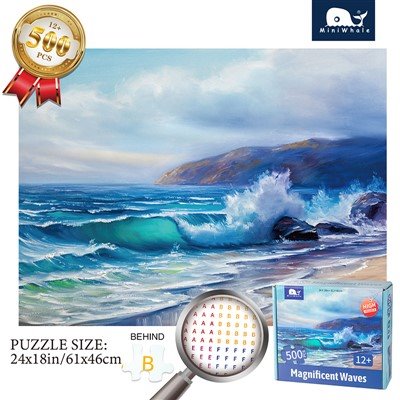
Now, let’s talk about what to avoid if you’re shopping for kinesthetic learners. I see this all the time: people buy jigsaw puzzles of landscapes, thinking “that’s visual, no – a landscape jigsaw is great for visual learners, but kinesthetic learners need more. Wait, no, even the big floor jigsaws? Wait, floor jigsaws can be good if they’re 50+ pieces and require bending, standing, picking up large pieces – but if it’s a tiny puzzle you do at a desk, no, that’s not going to work. Also, crossword puzzles? Written on paper, you’re just filling in blanks, no movement – kinesthetic learners will check out before the first “across” clue. Matching games on a screen? Zero movement, no, that’s the opposite of what they need.
Another thing I love about these puzzles: they adapt. For little kids, the 3D building sets can be simple – like a toy house with big, easy-to-snap pieces. For teens, they have advanced versions with small gears and more complex structures. The tactile tiles can be basic letter sets for kindergarteners, or multi-step math grids for middle schoolers. So it’s not a one-size-fits-all, which is why as a puzzle supplier, we work with a ton of schools and parents to curate sets that fit each learner’s age and skill level.
Let me throw in a quick real example: last semester, a special ed teacher reached out to us because she had a student diagnosed with ADHD who’d failed every reading program the school tried. She got our tactile spelling tiles, and within a month, that student was reading at grade level. Why? Because he wasn’t just sounding out words on a page – he was picking up each letter tile, moving them around, feeling how each sound tied to a physical piece. That’s the power of kinesthetic learning when it’s paired with the right puzzle. It’s not about “fixing” a kid’s attention span – it’s about meeting them where they are, using movement to make learning stick.
Now, let’s wrap this up with why you should care if you’re a parent, teacher, or even someone shopping for a teen who hates school. Kinesthetic learners make up like 30% of the population, right? (Source: Educational Psychology Review, I’ll list that later) – that’s one out of three people you know. If you’ve ever heard someone say “I learn best by doing”, that’s them. So the next time you’re looking for a gift or a classroom activity, skip the worksheet or the video – grab a puzzle that lets them move, touch, and build.
For anyone who’s a school administrator, teacher, or parent looking to stock up or find the right sets for your kinesthetic learners, I’m here to help. We’ve got custom sets for classrooms, small packs for home use, and even advanced puzzles for teens and adults. Just reach out to chat through what you’re looking for, and we can put together a set that fits your needs. No pressure, no weird sales pitches – just actual puzzles that work for people who need to move to learn.
Oh, and before I forget, here’s that quick research to back this up:
- Educational Psychology Review – Kinesthetic Learning Modalities and Retention in K-12 Populations
- National Association for the Education of Young Children (NAEYC) – Hands-On Puzzle Use and Cognitive Development
- Journal of STEM Education – Mechanical Puzzles as Tools for Kinesthetic STEM Learning
Interactive Books That’s it, no fluff, just the straight facts about what works for kinesthetic learners. If you’ve got questions or want to talk through specific needs, don’t hesitate to reach out. Happy puzzling!
NINGBO LOTO PACKAGE MANUFACTORY CO.,LTD
Ningbo Sentu Art and Crafts Co., Ltd. is one of the most professional educational puzzles manufacturers and suppliers in China. With abundant experience, we warmly welcome you to buy high quality educational puzzles made in China here from our factory. If you have any enquiry about cooperation, please feel free to email us.
Address: 3rd Floor, Momi Community, New Jinfeng, No. 68, Chunchao Road, Yinzhou District, Ningbo City, Zhejiang Province, Ningbo, Zhejiang, China
E-mail: sales@nbprinting.com
WebSite: https://www.lotopuzzle.net/
